
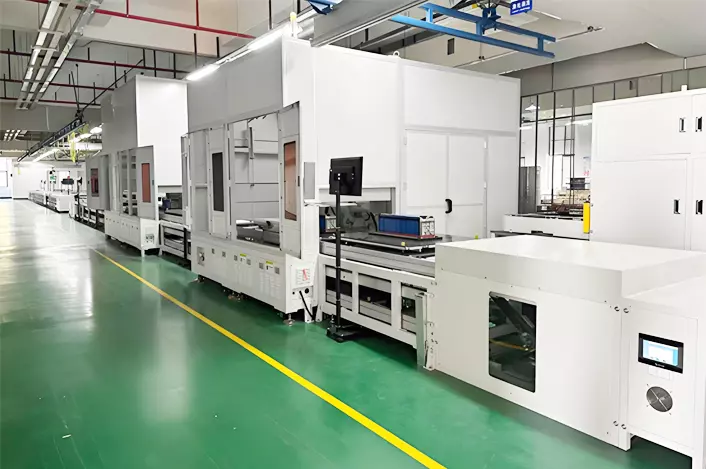
PACK Automated Production Line
The PACK automated production line integrates functions such as material conveying, robotic operations, component assembly, in-process inspection, and data acquisition, and is used for the automated production of battery modules and PACK products. Through the coordinated operation of industrial robots, visual positioning, dedicated tooling, and enclosed workstations, the production line improves assembly accuracy, production efficiency, and product consistency, while also enhancing the standardization and traceability of the manufacturing process.
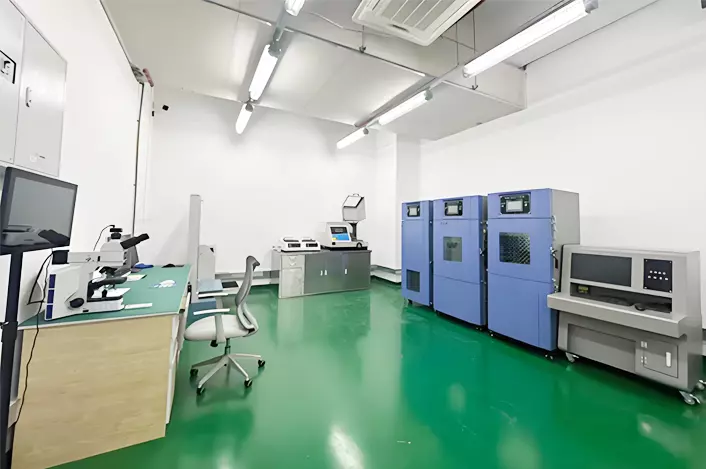
Experiment | Product Reliability Laboratory
The Product Reliability Laboratory is equipped with high and low temperature environmental test chambers and professional testing equipment, capable of conducting temperature, humidity, temperature cycling, and environmental adaptability tests on cells, modules, PACKs, and related components. By simulating various usage environments, it verifies the performance stability and reliability of products, providing data support for product R&D, design verification, quality assessment, and continuous improvement.
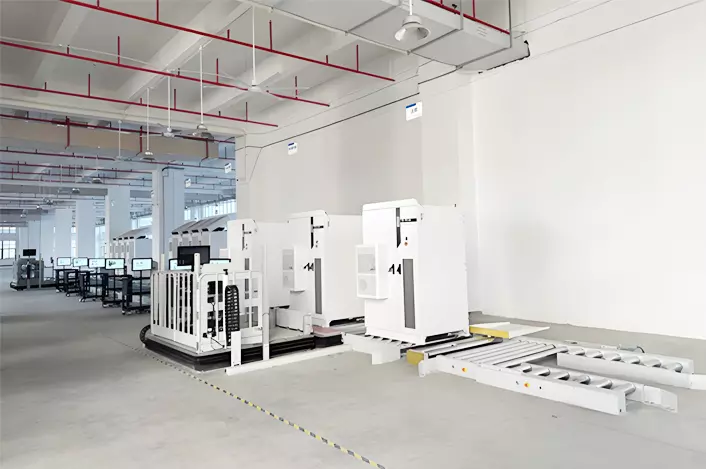
Assembly Line | Energy Storage System Assembly Line
The energy storage system assembly line employs roller conveyor systems, positioning fixtures, and automated assembly equipment to facilitate the loading, transfer, assembly, and inspection of energy storage cabinets and system components across various workstations. The production line features seamless workstation integration and flexible manufacturing capabilities, accommodating diverse product specifications and varying production takt times, thereby enhancing overall line coordination efficiency and on-site manufacturing management standards.
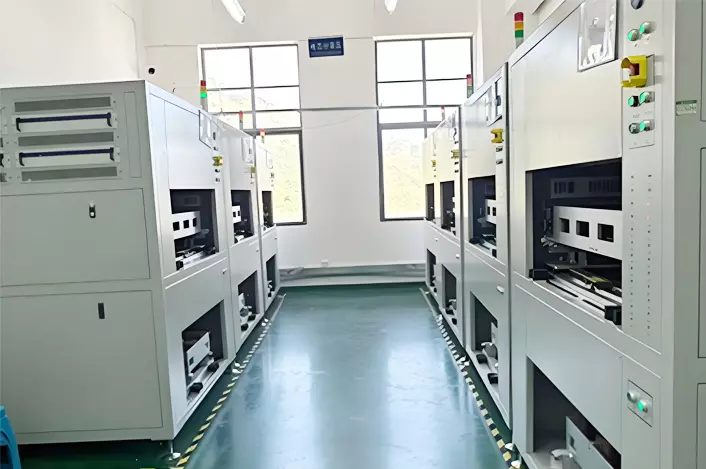
Aging | Charge-Discharge Aging Test System
The charge-discharge aging test system is used to conduct charge-discharge cycling, capacity, performance stability, and consistency verification on battery modules or PACKs. The equipment executes test tasks according to programmed procedures, and monitors and records operational status and key data in real time. It can promptly identify early-stage anomalies in products, providing a basis for finished product quality assessment, performance evaluation, and factory inspection.